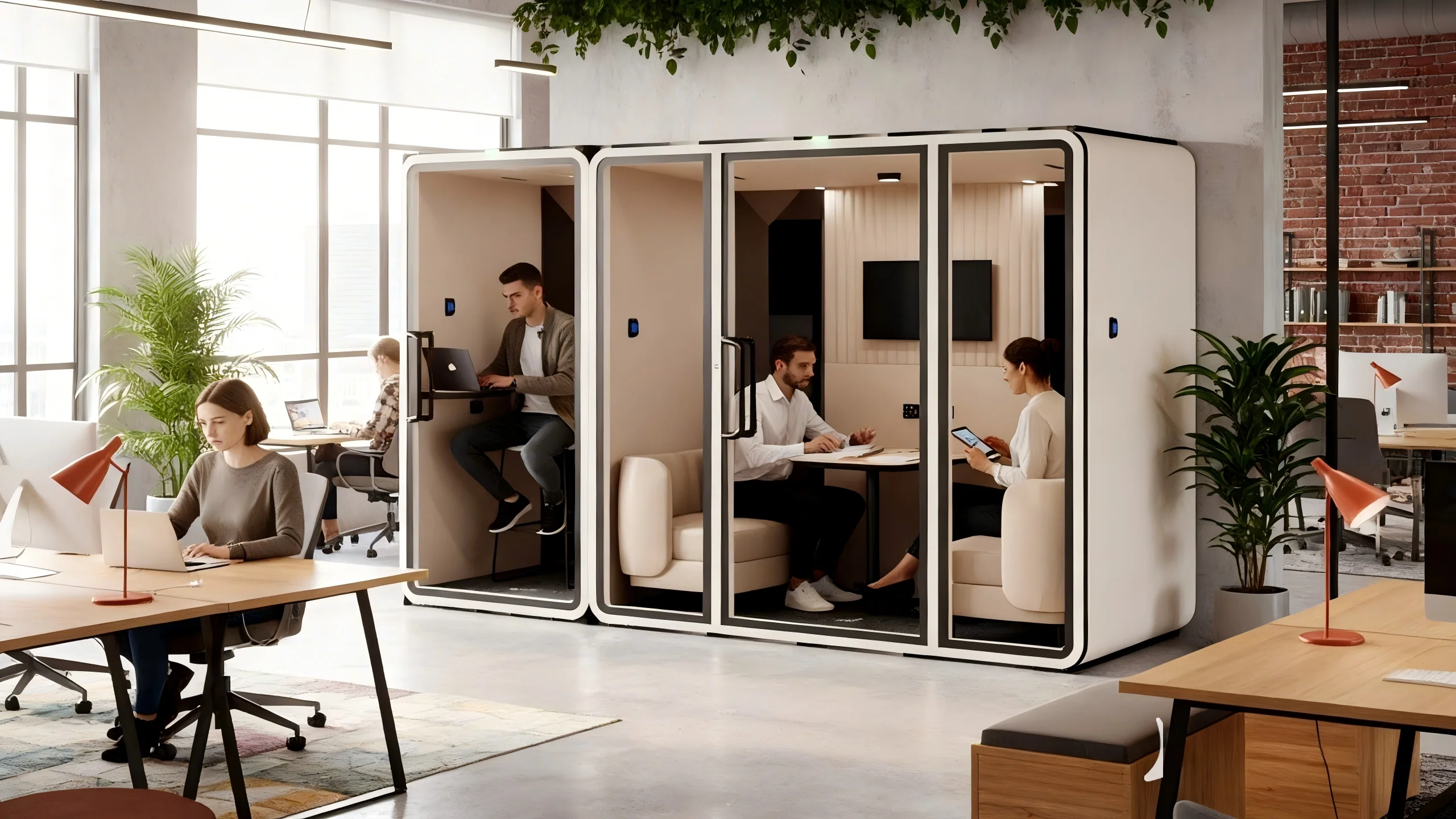
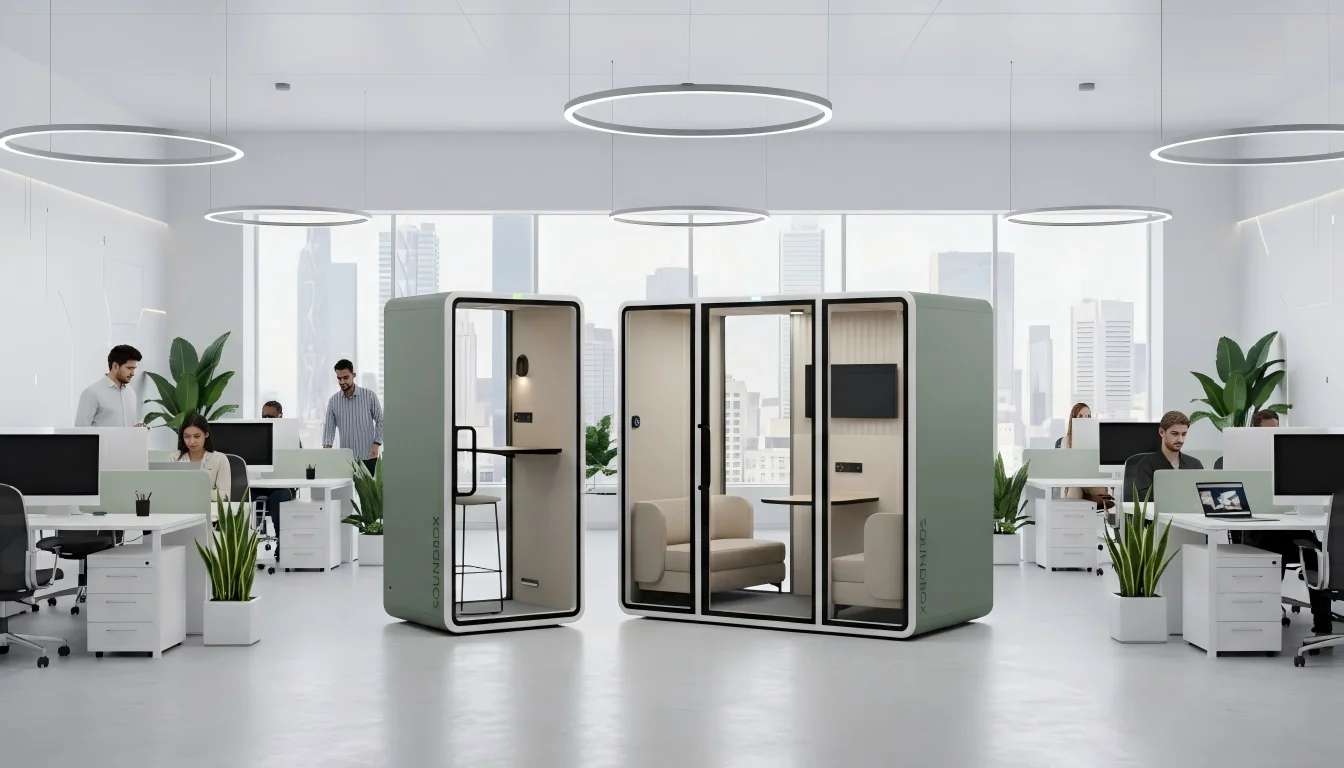
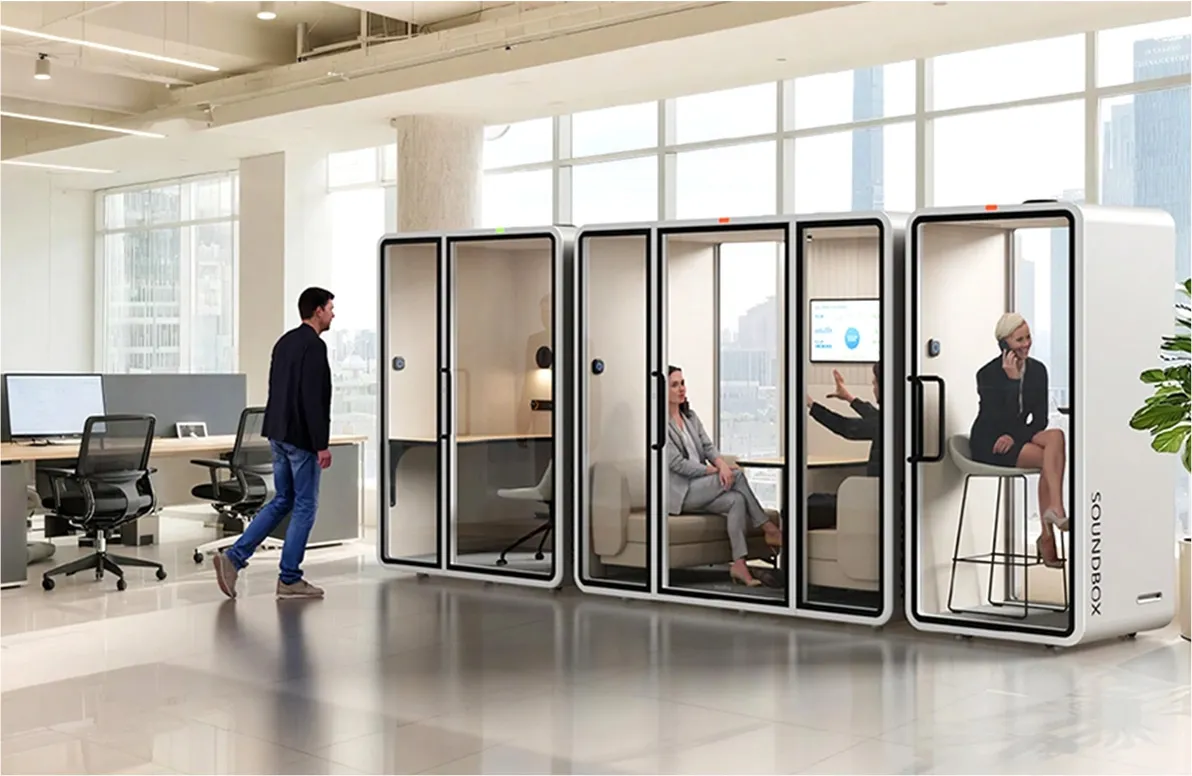
Open-plan offices are designed to look collaborative. But beneath the exposed ceilings and shared desks, a silent productivity crisis is unfolding. The British Journal of Psychology estimates that background speech alone reduces cognitive output by up to 67% — and that's in controlled conditions. The real number in a busy UAE open office is likely worse.
The problem isn't the layout itself. It's the acoustic environment that the layout creates. Here are five signs your office has an acoustic problem — and the fix for each one.
Employees take calls in corridors, stairwells, or outside
If your team routinely leaves their desk to take a phone call, that's not a personal quirk — it's a spatial signal. They've self-diagnosed the acoustic problem and found the only available solution: physical distance from the noise source. Every corridor call is lost desk time, and it signals to the rest of the team that the office can't support focused conversation.
→ Fix: A VRT Solo or Duo pod placed near the team cluster eliminates corridor wandering and brings calls back on the floor in a dedicated, acoustically sealed space.
Most employees wear noise-cancelling headphones all day
Noise-cancelling headphones have become the unofficial DND sign of open-plan offices — a visible signal that the wearer cannot be interrupted. When the majority of your team wears them consistently, you have collectively spent thousands of dirhams on a workaround for a problem the office itself should solve. Headphones also destroy spontaneous communication, a core advantage of co-location.
→ Fix: Acoustic zoning — a mix of open collaboration space and pod-enclosed quiet zones — allows employees to choose their acoustic environment based on the task, rather than defaulting to permanent headphone isolation.
Video calls are frequently interrupted or rescheduled
External parties on video calls notice your office noise before you do. Background conversations, keyboard clatter, and HVAC hum bleed into microphones even with directional mics. When clients, partners, or candidates experience this regularly, it creates a perception of disorganisation — regardless of the actual quality of the work being done.
→ Fix: A dedicated call pod (VRT Duo or VR S) eliminates microphone bleed entirely. Clients hear the person, not the office.
HR, legal, and management conversations happen in the car park
Confidential conversations — performance reviews, disciplinary meetings, salary discussions, medical accommodations — should never happen in an open office. When they do, or when they're deferred to a car park conversation, both parties are compromised: one for privacy, one for being overheard. This creates legal and reputational exposure in environments with UAE Labour Law obligations.
→ Fix: A VRT Duo or Quartet provides a private acoustic environment for sensitive conversations without requiring a separate meeting room booking or off-site venue.
Meeting rooms are booked out weeks in advance for individual focus work
When employees book meeting rooms just to find a quiet place to think or write, you have a supply/demand mismatch: your meeting infrastructure is being used as a noise refuge rather than for its intended purpose. This means actual meetings get pushed, productive time is fragmented, and your facilities investment is being misdirected.
→ Fix: Acoustic pods absorb demand for quiet individual work, freeing your meeting rooms for actual meetings. The ROI calculation is straightforward: one VRT Solo costs a fraction of the wasted meeting room time over its lifetime.
The Common Thread
Every one of these signs points to the same root cause: the open-plan office was not designed for the range of work modern teams do. It optimises for visibility and communication at the cost of privacy, focus, and acoustic quality. Acoustic pods don't replace the open office — they complete it by adding the acoustic layers it was designed without.
Speak to SonicHive about an acoustic assessment for your UAE office →